Abundant Health™ Blog

February 18, 2016
by Abundant Health™
6 Comments

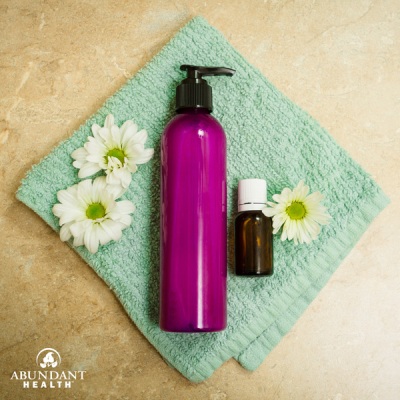
Moisturizing Shampoo with Essential Oils

Would you like to try making your own shampoo? This recipe combines the grease-cutting properties of Castile soap with the moisturizing properties of coconut milk. We also added a little honey, jojoba oil, and vitamin E oil to nourish and strengthen your hair. And, of course, the essential oils you add will increase the benefits this shampoo gives your hair.

Some great essential oil combinations include the following:

  • 8 drops each of lemon, lavender, melaleuca, and rosemary essential oils (great oils for dandruff)
  • 12 drops clary sage, 8 drops lavender, and 8 drops orange essential oil (great oils for fragile hair)
  • 8 drops each of rosemary, peppermint, cedarwood, and lavender essential oils (great oils for hair loss)
  • 10 drops peppermint and 15 drops lavender essential oil
  • 10 drops peppermint and 15 drops orange essential oil
  • 10 drops lavender, 15 drops lemongrass, and 8 drops lemon essential oil

AH_Shampoo

Moisturizing Shampoo with Essential Oils

Servings: Yield = 8 oz. | Time: 10 minutes active | Difficulty: Easy

Ingredients:

Instructions:

  1. Add all ingredients to a bowl, and whisk until well combined. An immersion blender, BlenderBottle®, or regular blender may help with this step.
  2. Transfer shampoo to bottle.
  3. To use, shake to combine; then take a small amount (about 1 tsp.), and rub it into the scalp and down the hair follicles. Make sure to rinse well.

Note: If you find this shampoo leaves your hair a little greasy, you may want to mix together 1 Tbsp. apple cider vinegar and 1 cup of water to use as a rinse after shampooing your hair.

February 16, 2016
by Abundant Health™
0 comments

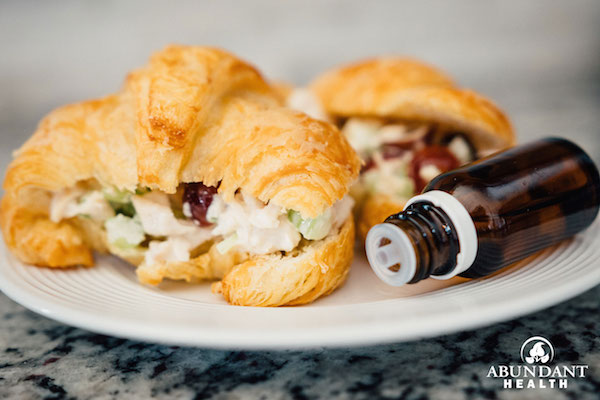
Chicken Salad Croissants

Share your love of essential oils through food! These chicken croissants are so good, and they are a perfect finger food for a bridal shower, baby shower, family luncheon, or anything else.

Croissants-AH

Chicken Salad Croissants

Servings: Yield=9 croissant sandwiches | Time: 25 minutes active | Difficulty: Easy

Ingredients:

  • 1 cups grapes, sliced
  • 1 cup celery, finely chopped
  • 1 large chicken breast, cooked and diced
  • 1/4 cup mayonnaise
  • 2 drops lemon essential oil
  • 2 Tbsp. ranch
  • Salt to taste
  • 9 small croissant rolls

Instructions:

  1. Combine the grapes, celery, and chicken in a medium-size bowl.
  2. Stir together the mayonnaise, lemon essential oil, and ranch.
  3. Stir mayonnaise mixture into the chicken mixture until well incorporated.
  4. Add salt to taste.
  5. Spoon mixture onto croissants, and serve!

February 12, 2016
by Abundant Health™
0 comments

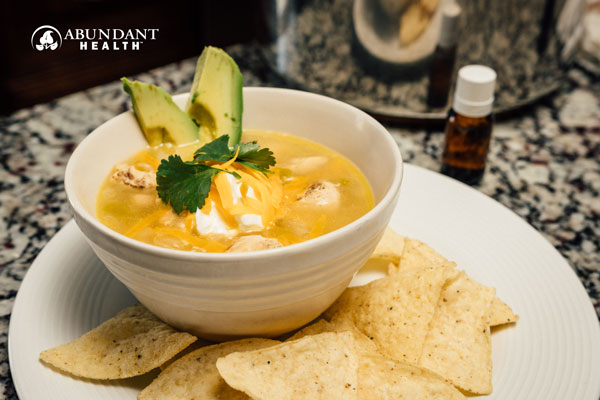
White Chicken Chili

Warm up during the cold winter months with this healthy white chicken chili, infused with the health benefits of cumin, oregano, and lemon essential oils.

White-Chicken-Chili-DSC00919_export-H

White Chicken Chili

Servings: 8 | Time: 15 minutes active; 1 hour inactive | Difficulty: Easy

Ingredients:

  • 2 Tbsp. olive oil
  • 3/4 cup onion, finely chopped
  • 1/2 cup celery, diced
  • 4 cups cooked chicken, diced
  • 6 cups chicken broth
  • 3 cans white beans
  • 2 cans green chilies (4 oz. size)
  • 1 Tbsp. lime juice
  • 1 tsp. sugar
  • 1 tsp. ground coriander
  • 2 tsp. chili powder
  • Dash of cayenne pepper
  • 2 drops cumin essential oil
  • 1 toothpick oregano essential oil
  • 2 drops lemon essential oil

Toppings:

  • Crushed tortilla chips
  • Grated cheese
  • Chopped green onion
  • Sour cream
  • Cilantro
  • Avocado
  • Salsa

Instructions:

  1. Pour olive oil into a large pot, and brown the onion over medium-high heat. Add celery, and cook slightly.
  2. Add the rest of the ingredients (except for the essential oils), reduce the heat to low, and then let simmer for at least one hour. Remove from heat.
  3. Add essential oils, and let the flavors blend for at least 5 minutes before serving.
  4. To serve, place 2 Tbsp. of crushed tortilla chips and 2 Tbsp. of shredded cheese in soup bowls. Ladle in the soup. Top with additional crushed tortilla chips, grated cheese, green onion, sour cream, cilantro, avocado, and salsa. Serve immediately.

February 9, 2016
by Abundant Health™
0 comments

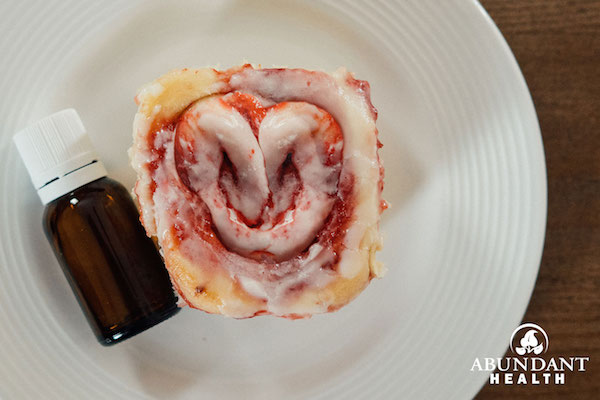
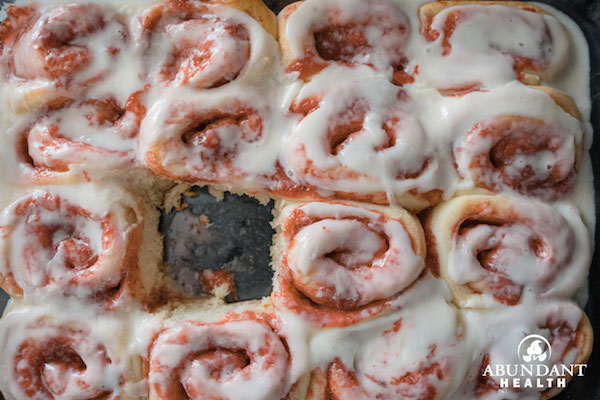
Strawberry Lemon Sweet Rolls for Your Valentine

Make something sweet for your sweetheart this Valentine’s Day. These delicious sweet rolls will say “I love you” in a big way.

Rolls-3

Strawberry Lemon Sweet Rolls

Servings: Yield=16 sweet rolls | Time: 40 minutes active; 2 hours inactive | Difficulty: Moderate

Ingredients:

  • Sweet dough (see recipe below)
  • 2 Tbsp. butter, softened
  • Strawberry filling (see recipe below)
  • Lemon frosting (see recipe below)

Instructions:

  1. On a floured surface, roll out sweet dough in a rectangle shape about 1/8 inch thick.
  2. Spread butter evenly across rolled out dough.
  3. Spoon strawberry filling onto dough, and spread evenly.
  4. Starting on one of the long ends, roll dough up tightly into one long roll. (Note: if a lot of the strawberry filling squeezes out while you are rolling, you can spoon some of it back on top of the sweet rolls before baking.)
  5. Using a long strand of dental floss, cut the rolls to about 1 inch thick, and place them in a greased baking dish.
  6. Cover the baking dish with a clean towel, and place strawberry rolls in a warm place to rise.
  7. Once the sweet rolls have doubled in bulk, bake them at 375 degrees Fahrenheit for 15–20 minutes, or until lightly golden.
  8. Allow the strawberry rolls to cool slightly, and then spread the lemon frosting on top.
  9. Serve warm or cold—either way is delicious!

Sweet Dough

Servings: 16 | Time: 25 minutes active; 2 hours inactive | Difficulty: Moderate

Ingredients:

  • 1 Tbsp. yeast
  • 1/2 cup warm water
  • 1/2 cup warm milk
  • 1/4 cup sugar
  • 1 tsp. salt
  • 3 Tbsp. butter, softened
  • 2 1/2–3 cups flour
  • 1 egg

Instructions:

  1. In an stand mixer bowl with a dough hook, dissolve yeast in warm water.
  2. Stir in milk, sugar, salt, and butter.
  3. Add 1 cup of flour and the egg to make a batter; mix for 1 minute.
  4. Add the remaining flour, and mix until well incorporated to form a soft dough.
  5. Remove dough from mixture, knead a few times, and then place in a greased bowl with a towel over it.
  6. Place dough in a warm place to rise until double in bulk.

Strawberry Filling

Servings: Yield=2 cups | Time: 20 minutes active | Difficulty: Easy

Ingredients:

  • 2 cups strawberries, finely chopped
  • 1/3 cup sugar
  • 1 1/2 Tbsp. cornstarch
  • 2 drops lemon essential oil

Instructions:

  1. Place strawberries in a saucepan over medium heat, and warm until the berries start to release their juices, stirring frequently.
  2. Stir together the sugar and the cornstarch, and then stir them into the strawberries.
  3. Continue heating until the mixture start to thicken, stirring frequently.
  4. Remove from heat, stir in lemon essential oil, and place in the fridge to cool.

Lemon Frosting

Servings: Yield=Frosts 16 sweet rolls | Time: 10 minutes active | Difficulty: Easy

Ingredients:

  • 4 Tbsp. butter, melted
  • 2 cups powdered sugar
  • 2 Tbsp. lemon juice
  • 1–2 Tbsp. milk
  • 3 drops lemon essential oil

Instructions:

  1. In a medium-sized bowl, stir together melted butter and powdered sugar.
  2. Add lemon juice, and stir to incorporate.
  3. Add milk until you reach your desired consistency.
  4. Stir in lemon essential oil.
  5. Use to frost strawberry sweet rolls.

Strawberry-Rolls-Pan

February 8, 2016
by Abundant Health™
0 comments

Essential Oil Spotlight: Rose

iStock_000025760514_Small

Rose essential oil is steam distilled from the flowers of Rosa damascena, or the Bulgarian rose. Historically, rose was known for its healing properties and has been utilized in medicine throughout the ages. Some of the oldest uses of rose essential oil include digestive and menstrual problems, headaches and nervous tension, poor circulation, and fever.

Rose essential oil is commonly used to help with calming, poison ivy, relaxing, and scarring. The beautiful fragrance of rose essential oil is aromatically known to be stimulating and elevating to the mind and creates a sense of well-being.

Rose oil may also help with aging, asthma, chronic bronchitis, frigidity, gingivitis, herpes simplex, infections, skin disease, tuberculosis, ulcers, wounds, and wrinkles.

Rose is known for its antibacterial, antihemorrhaging, anti-infectious, aphrodisiac, and sedative properties as well as its powerful effect on emotional balance.

Would you like to learn more about rose essential oil? See the Reference Guide for Essential Oils for more information about this and many other pure essential oils.

Source: Reference Guide for Essential Oils, 2014 Edition, p. 116–117

February 4, 2016
by Abundant Health™
1 Comment

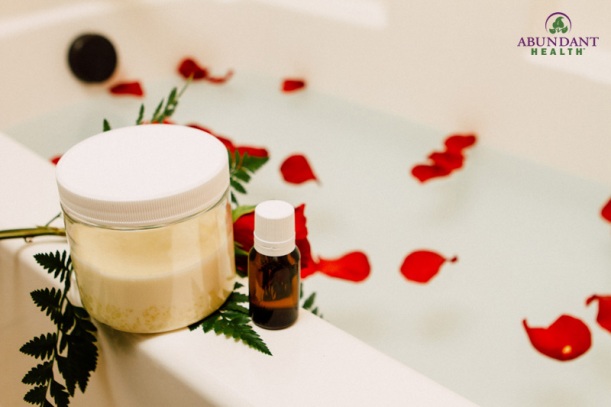
Romantic Cream Bath Salts

Do you and your spouse like to enjoy a romantic bath together? These bath salts will not only enhance the mood with the aroma of essential oils, but the cream will make your skin feel silky smooth! Add a few rose petals for the perfect final touch!

AH_RomanticCreamBath

Romantic Bath Salts

Servings: 1 | Time: 5 minutes active | Difficulty: Easy

Ingredients:

  • 1/2 cup Epsom Salts
  • 3/4 cup heavy cream
  • 5 drops ylang ylang essential oil
  • 2 drops geranium essential oil
  • 2 drops rose essential oil
  • 2 drops orange essential oil
  • 1 drop sandalwood essential oil
  • 16 oz. PET Jar

Instructions:

  1. Combine all ingredients in a 16 oz. PET Jar. Shake to combine.
  2. Place the jar under the water spout as you fill the bathtub, and let the water push all the ingredients out and disperse them throughout the bath.
  3. Add rose petals to the tub or candles around the room to enhance the mood.

January 28, 2016
by Abundant Health™
0 comments

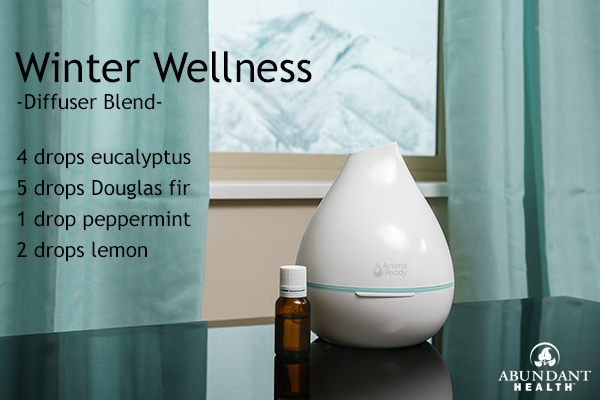
Winter Wellness Diffuser Blend

Do you have the post holiday blues? Try this new diffuser blend; it’s sure to clear your head with its simple, peaceful aroma. Need a new diffuser? Click here to view our wide selection of diffusers to find the right one for you!

Winter-Wellness_diffuser-blend

January 27, 2016
by Abundant Health™
0 comments

Tools to Make an EO Life Easier: The Hole Punch

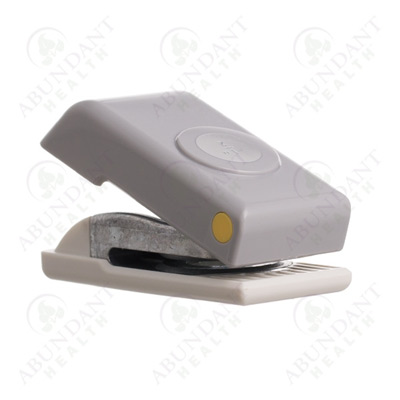
Today’s post in the series “Tools to Make an EO Life Easier” is about our Sample Vial Hole Punch.

AH_9576

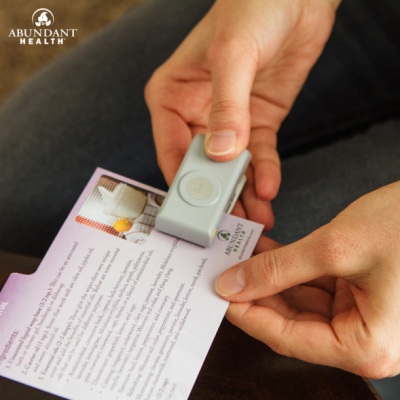
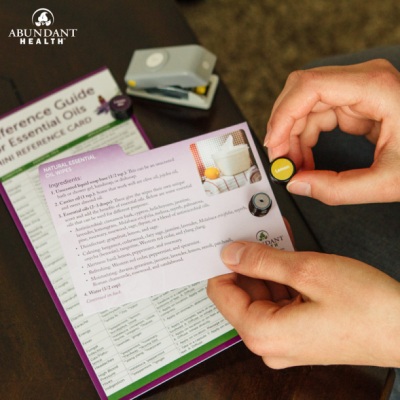
This hole punch is the perfect size for attaching sample bottles (1/4 dram and 5/8 dram sizes) to any paper product.

AH_HolePunch1

If you have information about essential oils, you can use this hole punch to attach a sample vial to it and pass it along to someone who needs it. The hole punch works best with thicker paper, such as cardstock, photo paper, business cards, greeting cards, recipe cards, etc. You can even attach a sample bottle to a Mini Reference Card!

AH_HolePunch3

To assemble your sample cards, simply punch the card or paper you would like to share, and attach a ¼ dram or ⅝ dram sample vial through the hole by taking off the cap, sliding the neck of the vial through the hole, and putting the cap back on. For more accurate cuts, try using the hole punch upside down. It also has a lock on the bottom that accommodates for safe, stackable storage.

What would you attach a sample vial to?

January 19, 2016
by Abundant Health™
4 Comments

Essential Oil Lingo

Are you new to essential oils and unfamiliar with the lingo? Even if you aren’t an essential oil newbie, this post might be a good refresher for you or help you be able to explain this stuff to others.
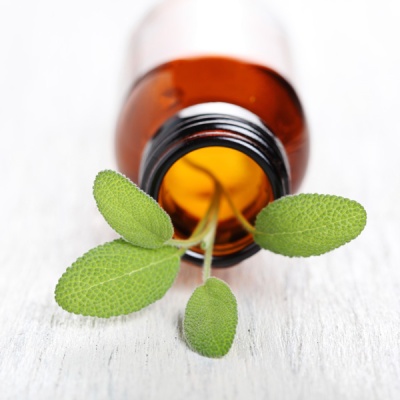
OilBottleBlend000013155976XLarge

Essential Oils (often abbreviated as EO): Substances created inside aromatic plants that are both volatile (they evaporate) and oil soluble (they easily mix with oils and fats).

Volatile: A substance that will evaporate when exposed to air is referred to as volatile. Volatile substances are typically light substances with small molecules.

Single Oil: A single oil is one type of oil (e.g. lemon, peppermint, lavender) by itself.

Oil Blend: An oil blend is a mixture of two or more single oils. Oils are typically blended to combine their individual properties or aromas.

Therapeutic Grade: This refers to the quality of the essential oil. One of the factors that determines the purity and therapeutic value of an oil is its chemical constituents. These constituents can be affected by a vast number of variables, including the part(s) of the plant from which the oil was produced, soil condition, fertilizer (organic or chemical), geographical region, climate, altitude, harvest season and methods, and distillation process. When using essential oils for therapeutic purposes, it is necessary to obtain the purest therapeutic-grade essential oils possible. Anything less than pure, therapeutic-grade essential oil may not produce the desired results and can, in some cases, be extremely toxic.

Steam Distillation: In this method of extraction, plant material is placed in an extraction chamber, and then steam (produced by boiling water in another chamber) is released into the bottom of the extraction chamber where the plant material is. Both the steam and the essential oil rise to the top (this is because essential oils are volatile). The steam and essential oil are directed to another chamber where they are allowed to cool. Since essential oils are hydrophobic (essential oils do not mix with water), as the oil/steam mixture cools, the essential oil rises to the top of the chamber while the water stays at the bottom. The essential oil can then be easily separated from the water.

Cold Pressed: Cold expression, or cold pressing, is the method most commonly used for extracting essential oils from citrus fruits. Mechanical pressure is used to “press” the oils out of the plant material—most often from the peel or rind.
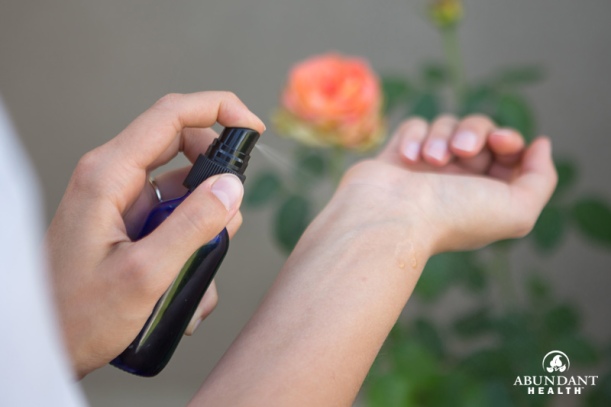
AH_PerfumeSpray

Topical Application: Topical application means that the oils are applied directly to the skin, hair, or other surface of the body. This can be through massage, bath, direct application of the oils, or application of the oils within a cream, lotion, bath gel, or soap. While many oils can be applied neat (without dilution), others may need to be diluted with a vegetable or “carrier oil” before topical application, especially in cases of young or sensitive skin.

Carrier Oil: A carrier oil is a vegetable oil derived from the fatty portion of a plant, usually from the seeds, kernels, or the nuts. Carrier oils are used to dilute and “carry” an essential oil into the skin during topical application. Common types of carrier oils include Almond Oil, Fractionated Coconut Oil, Jojoba Oil, Coconut Oil, and olive oil.

FCO: FCO is an abbreviation for Fractionated Coconut Oil. This oil is a common carrier oil because it is clear, odorless, and absorbs easily into the skin.

Neat: This refers to the essential oil being applied without dilution.
RollOnDilution: This refers to combining an essential oil with a carrier oil so its effects are not so concentrated in one area. Since essential oils are really potent, and some oils may cause irritation, diluting the essential oil with a carrier oil is recommended. Children, pregnant women, and those with sensitive skin should always dilute essential oils. Please see the Single Oils section of the Reference Guide for Essential Oils for recommended dilutions. Diluting an essential oil in carrier oil is also a great way to help spread the essential oils over a larger area.

Roll-on: A roll-on bottle (or roller bottle) is useful for diluting an essential oil for topical application and applying essential oils easily to the skin.

Photosensitive: Using some oils such as lemon, orange, grapefruit, mandarin, bergamot, angelica, etc. before or during exposure to direct sunlight or UV rays (tanning beds, etc.) may cause a rash, pigmentation, or even severe burns. These oils are designated as photosensitive, and care should be taken after applying these oils on the skin to protect the skin from direct, prolonged ultraviolet light exposure for 1–3 days.

Aromatic Application: Aromatic application means that oils are inhaled through the mouth and nose. This could include inhaling the aroma of the oil directly from the bottle or inhaling the aroma of the oil after it has been applied to the hands or to another material, such as a tissue or a cotton wick. It could also mean breathing in the vapor or mist of an oil that has been diffused or sprayed into the surrounding air.

Diffuse: The definition of diffuse is to spread or cause to spread something over a wide area. So, in the essential oil world, to diffuse means to spread essential oils into the air. Sometimes, the oils are diffused over a wide area; but other times, the oils are diffused within one’s personal space.

Diffuser: A diffuser is a device that disperses oil into the air. There are 4 types of diffusers: nebulizing diffusers (diffuses straight oil), humidifying/ultrasonic diffusers (uses water and an ultrasonic disc to diffuse the oil), fan diffusers (a fan blows the oils into the air), and heat diffusers (uses heat to help disperse the oil). Click here for more information about diffusers.
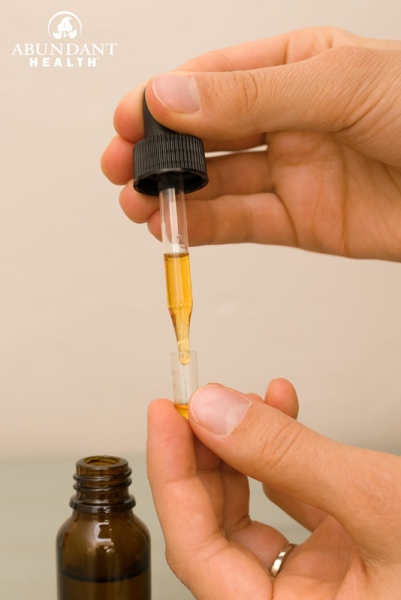
AH_DropperTop_Capsule
Internal Application: Internal application means that the oils are taken orally as a dietary supplement. This is done either by adding the oil to a food or beverage that is then consumed or by swallowing a capsule with the oil inside. Not all essential oils can be taken internally. Please see the Single Oils section of the Reference Guide for Essential Oils for oils safe for consumption.

Capsules: One of the best ways to take essential oils internally is with the aid of empty capsules. Using capsules allows one to not only bypass any unpleasant tastes, but it also enables the oils to descend to the right area of the body before dissolving to allow for greater absorption. It is important to dilute essential oils when using a capsule. The best way to do this is fill the capsule halfway with essential oil and halfway with olive oil. You can dilute your essential oils ahead of time in a dropper bottle for an easier time filling the capsule when you need it.
ReferenceGuide

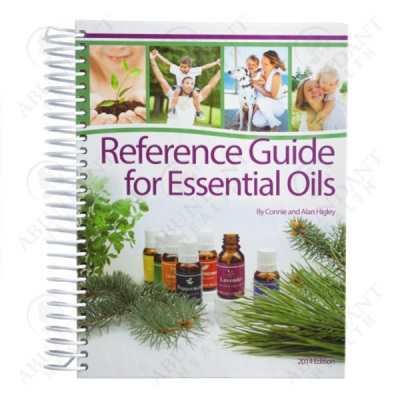
Reference Guide for Essential Oils by Connie and Alan Higley: This book is sometimes referred to as the Higley Book, the Reference Guide, or abbreviated as RG. The Reference Guide to Essential Oils is very useful in understanding and using essential oils. In fact, most of the information in this article can be found in the Reference Guide. The book contains several sections including Science and Application, Single Oils, Oil Blends, Personal Care Products, Supplements, and the Personal Guide as well as many useful charts and helpful information. You can look up an oil and see what information is available relating to it and what it can be used for. You can also search by a condition and see what oils can be used to help.

Oils and Water: Oil and water do not mix! If essential oils get into your eyes by accident or if they burn the skin a little, do not try to remove the oils with water. Water will only drive the oils deeper into the tissue. It is best to dilute the essential oils with a pure vegetable oil or carrier oil.

Source: Reference Guide for Essential Oils by Connie and Alan Higley, 2014 Edition

January 16, 2016
by Abundant Health™
0 comments

Recipes for Your BlenderBottle® – Meatballs and Salad Dressing

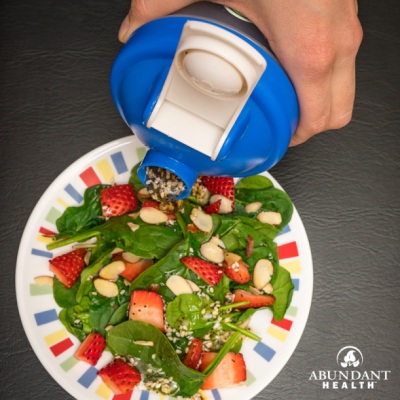
Have you heard of these BlenderBottles®? Perhaps you already have one that you use for shakes, but did you know that these BlenderBottles® can be used in so many ways for everyday cooking?

Each BlenderBottle® includes the patented, surgical steel BlenderBall® that rotates like a wire whisk inside the bottle to completely blend any liquid or powder ingredients, allowing you to quickly make shakes, salad dressings, drinks, baby formula, eggs, sauces, and so much more! The screw-on lid and snap cap are completely leak-proof, so you can take your bottle anywhere.

9075

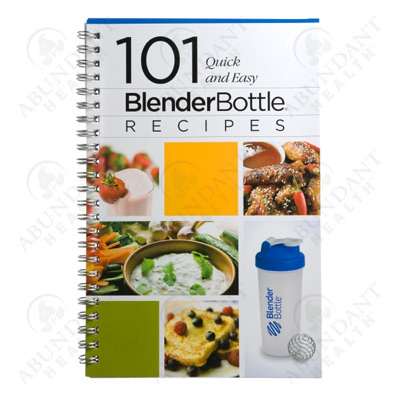
Below are a couple examples of recipes that are found in the book 101 Quick and Easy BlenderBottle® Recipes.

Tangy Meatball Bites

Servings: 4 | Time: 35 minutes active | Difficulty: Easy

Ingredients:

  • 1 lb. ground beef
  • 1 egg
  • 1/2 cup saltine crackers, crushed
  • 2 Tbsp. milk
  • 1/2 tsp. rubbed sage
  • 1/2 cup water
  • 1/4 cup ketchup
  • 2 Tbsp. brown sugar
  • 1 Tbsp. soy sauce
  • 1 Tbsp. vinegar

Instructions:

  1. In a medium bowl, combine ground beef, egg, crackers, milk, and sage. Mix well, and shape into 1-inch balls.
  2. In a large skillet, brown meatballs over medium heat; drain.
  3. In a small BlenderBottle®, mix the rest of the ingredients. Pour over meatballs, and bring to a boil. Reduce heat, and cover for 15–20 minutes or until meatball centers are no longer pink and are thoroughly cooked.

Note from Abundant Health™: This recipe also tastes great with essential oils! Try adding 1 drop each of rosemary, sage, thyme, and/or oregano essential oil to either the meatballs or the sauce.

Source: 101 Quick and Easy BlenderBottle® Recipes, p. 22

Strawberry Spinach Salad

Servings: 4 | Time: 15 minutes active; 1 hour inactive | Difficulty: Easy

Ingredients:

  • 2 Tbsp. sesame seeds
  • 1 Tbsp. poppy seeds
  • 1/2 cup white sugar
  • 1/2 cup olive oil
  • 1/4 cup distilled white vinegar
  • 1/4 tsp. paprika
  • 1/4 tsp. Worcestershire sauce
  • 1/8 tsp. onion powder
  • 10 oz. fresh spinach (rinsed, dried, and torn into bite-size pieces)
  • 1 quart strawberries (cleaned, hulled, and sliced)
  • 1/4 cup almonds, sliced

Instructions:

  1. Mix first 8 ingredients in a small BlenderBottle®. Chill dressing for 1 hour.
  2. In a large salad bowl, combine spinach, strawberries, and almonds. Pour dressing over salad, and toss to coat. Refrigerate for 10 to 15 minutes before serving.

Source: 101 Quick and Easy BlenderBottle® Recipes, p. 69

What have you used your BlenderBottle® for? We would love to hear from you!